Barbel
Barbus barbus
Barbel (Barbus barbus) is a freshwater fish found in UK waters. Clean, well-oxygenated rivers with gravel beds and steady flow. Weirpools, gravel runs and the tails of glides. Whether you can keep one depends on local rules — check before you do.
- Max length
- 120 cm
- Max weight
- 14 kg
- Water
- Freshwater
- How often
- Uncommon
Updated
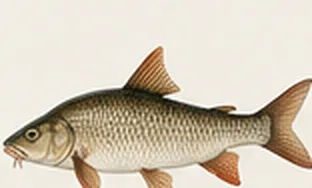
What it looks like
A long, streamlined, bronze-gold fish built for current: flat-bottomed, powerfully shouldered, with a pointed snout and an underslung mouth carrying four prominent barbules. The tail is deeply forked and enormous for the body.
Everything about a barbel is designed to hold station on gravel in fast water. That is also why they fight the way they do — hooked barbel use the current against you, and a first run can be hard to stop.
How to catch one
Bait
Pellet, meat, boilies and large lobworms.
Rig
A feeder or straight lead heavy enough to hold on the gravel, with a short strong hooklink.
When
Dusk and into dark, and after summer rain has put a little colour in the river.
Where
On the gravel in steady flow. Barbel hug the bottom and work upstream into the current.
Season: Summer and autumn, with a river close season from 15 March to 15 June.
Easy to confuse with
gudgeon
Gudgeon look similar in shape but stay small, have only two barbules and are heavily blotched.
Questions anglers ask
- Why do barbel fight so hard?
- They are shaped and muscled for holding position in strong current, and they use that current when hooked.
- Do barbel need special care after capture?
- Yes. They tire themselves completely and need proper recovery — hold the fish upright in the flow until it kicks away on its own. Never release a barbel that cannot hold itself upright.